What we do?
How the Process Works
Dismantling/Kitting
At the "origin" plant, the car is either not built at all or taken apart. Parts like the engine, chassis, body panels (often unpainted), and electronics are packed into containers.
Shipping
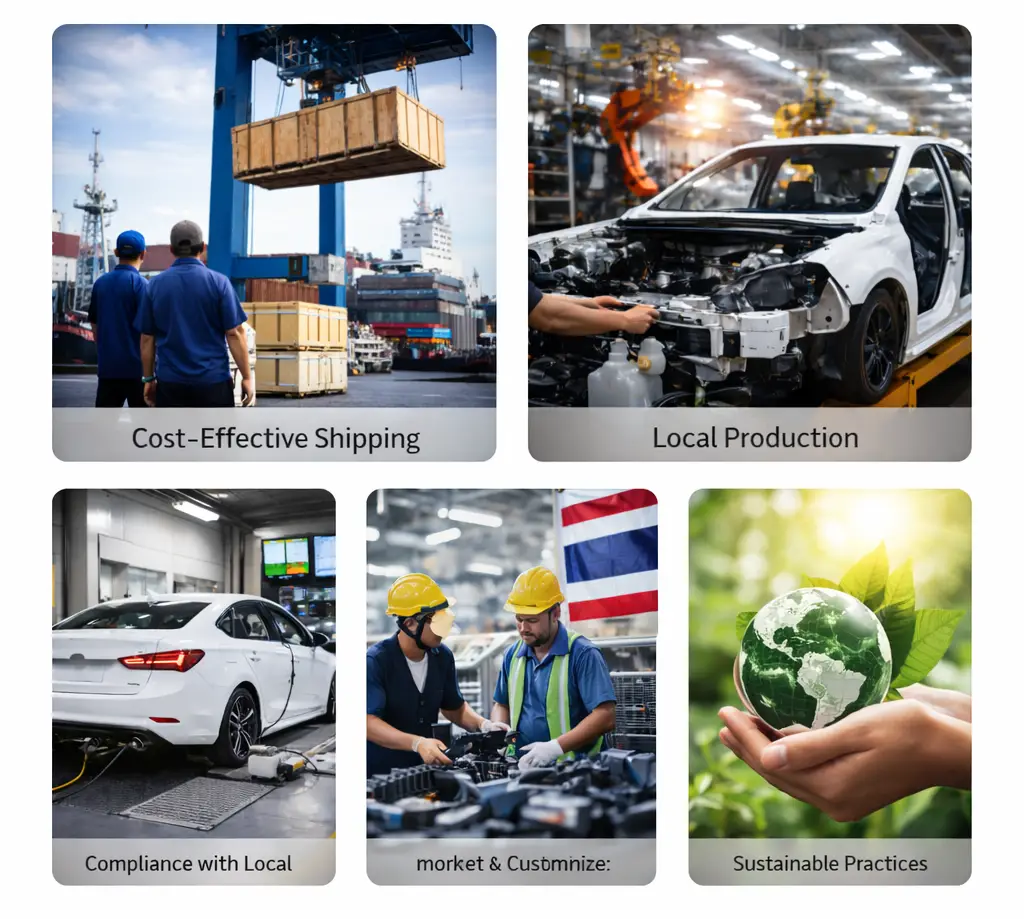
These kits are exported to the target country. Shipping "parts" is significantly cheaper than shipping "cars" because they take up less volume.
Local Welding & Painting
Unlike simpler assembly types, a true CKD process usually involves welding the body shell together and painting it in the local facility.
Quality Control
The vehicle undergoes the same rigorous testing as a fully imported model to ensure it meets brand standards.
Final Assembly
The powertrain, interior, and electronics are installed on the local line.
EV Conversion
We upgrade factory OEM trucks and buses wth a powerful electric motor system, advanced lithium-ion battery modules, and intelligent control software.
Why do manufacturers do this?
Manufacturers adopt the Completely Knocked Down (CKD) model to expand into new markets efficiently while controlling costs, compliance, and quality.
Lower Import Duties & Taxes
Many countries impose high tariffs on fully built vehicles. CKD kits are taxed at significantly lower rates, making local assembly far more economical.
Cost-Effective Production
Local assembly reduces logistics costs and allows manufacturers to take advantage of regional labor efficiencies without compromising quality.
Compliance with Local Regulations
CKD assembly helps brands meet local content and manufacturing requirements, which are often mandatory for market entry and government incentives.
Faster Market Entry
By assembling vehicles locally, manufacturers can respond quicker to market demand and customize products for regional preferences.
Sustainable Operations
Shipping vehicle parts instead of complete cars lowers transportation emissions, supporting more environmentally responsible manufacturing.